
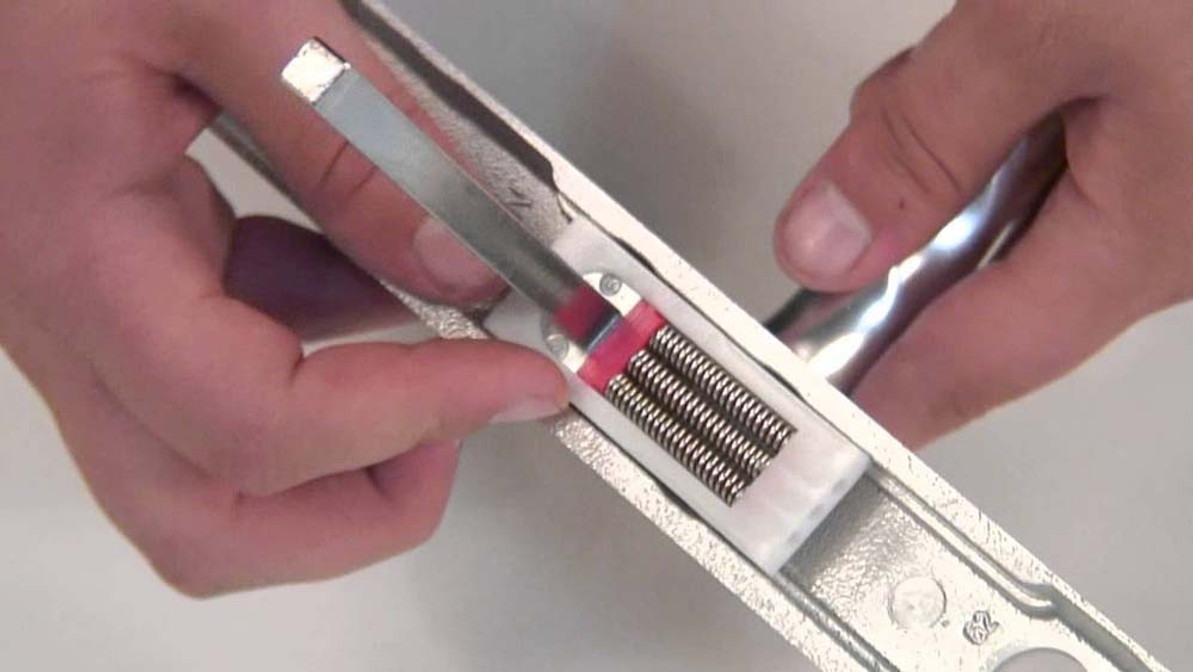
How to Fix Your uPVC Door Handle Spring
If your uPVC door handle is drooping, loose, or no longer sitting horizontally, the most likely culprit is a broken door handle spring. It's one of the most common issues we're asked about, and the good news is that it's usually a quick and inexpensive fix once you know which solution applies to your door.
Why Door Handle Springs Matter
A spring for uPVC door handles does more than keep things looking tidy. It also takes pressure off the lock mechanism, reducing wear on the internal gearbox over time. When the spring fails, the handle droops, and every operation puts added strain on your multipoint lock, which can lead to more costly repairs down the line.
Diagnosing the Problem
The first step is identifying whether your handle has built-in spring cassettes or whether the spring sits inside the lock mechanism itself. Handles made after 2000 almost always feature replaceable spring cassettes visible in the backplate: small cylindrical or rectangular plastic housings that sit over the spindle hole. Older handles tend to have the spring integrated into the lock gearbox, which is a different fix altogether.
Solution 1: Older Handles (No Built-In Spring Cassettes)
If your handle predates built-in cassettes, the spring inside the door lock gearbox has likely worn out. You can’t repair this spring in isolation, but the most cost-effective fix is to replace your uPVC door handle with a modern sprung version. These come with door handle spring cassettes already installed and immediately resolve drooping or loose handle issues without the expense of replacing the entire lock.
When selecting a replacement, you’ll need two key measurements: the backplate fixing centres (PZ distance, typically 68mm, 70mm, 85mm or 92mm) and the fixing centres between the two screw holes. Our uPVC door handle measuring guide walks you through both, or you can use the Door Handle Finder tool if you’re unsure where to start.
Solution 2: Modern Handles (Replacing Spring Cassettes)
If your handle is made/bought post-2000, you may be able to replace just the spring cassette rather than the whole handle set. To check, remove the two screws on the internal handle and slide the backplate free. If you can see a small plastic housing over the spindle hole, those are your spring cassettes, which can be swapped out individually.
We stock universal door handle spring cassettes that fit most modern sprung handles, sold in pairs for a complete internal and external repair. If your handle has a centre-mounted spindle hole, we also carry centre spindle hole spring cassettes to match.
Installing them is straightforward: pull the worn cassettes from the backplate, clean the mounting area, press the new cassettes firmly into place, refit the handles, and test that they return cleanly to horizontal. The whole job takes around 10 minutes.
Other Handle Problems Worth Knowing
A uPVC door handle loose on its backplate, where it wobbles even when the screws are tight, usually points to a cracked backplate rather than a spring issue. A handle that won’t lift to engage the lock is more likely a worn spindle or a failed lock gearbox. And if you’ve lost your keys rather than broken a spring, replacing just the euro cylinder is often all you need.
For a broader look at uPVC door handle repair, see our guide on how to fix a loose uPVC door handle, or if you’re fitting a replacement from scratch, how to change a door handle covers the full process.
Get the Right Parts
Whether you need a replacement spring for a uPVC door handle, a complete sprung handle set, or just a second opinion on which part to order, we’re here to help. Our team can often identify the right components from a photo of your existing handle, so just get in touch, and we’ll point you in the right direction.
—
Frequently Asked Questions
How do I know if my uPVC door handle spring is broken?
The most obvious sign is a handle that droops downwards rather than sitting horizontally. You may also notice it feels loose or fails to return to its position after use. If the handle operates the lock but won't spring back on its own, the spring cassette or internal lock spring has worn out.
Can I replace just the spring cassette, or do I need a new handle?
It depends on your handle. Modern handles (post-2000) typically have replaceable door handle spring cassettes that can be swapped out without buying a new handle set. Older handles have the spring built into the lock gearbox, so the most practical fix is upgrading to a new sprung uPVC door handle.
Is a broken door handle spring a security risk?
Not directly. A broken spring affects the handle's return mechanism but does not compromise the lock itself. Your door will still lock and unlock as normal. That said, it's worth fixing promptly because a drooping handle puts extra strain on the lock gearbox over time, which can lead to more costly repairs.
How do I measure my uPVC door handle for a replacement?
You need two measurements: the PZ distance (from the centre of the spindle hole to the centre of the keyhole, commonly 92mm) and the fixing centres (distance between the two screw holes, commonly 215mm or 240mm). Our door handle measuring guide covers both in detail, and the Door Handle Finder tool can help narrow down the right fit.
How long does it take to replace a door handle spring cassette?
For most homeowners, the whole job takes around 10 minutes. You only need a Phillips screwdriver to remove the handle screws, and the cassettes themselves are a simple push-fit. Replacing a complete handle set takes slightly longer but is still well within the scope of a straightforward DIY repair.
Recent Posts
-

Window Sealant or Window Seal? What's Gone Wrong | GB DIY
If you have been looking for how to replace window sealant, there is a fair chance the part you need …6th Oct 2026 -

Types of uPVC Door Hinges: How to Identify Yours
Working out the type of uPVC door hinges you have is the job standing between you and a repair that …10th Sep 2026 -

How to Measure Window Hinges and Friction Stays
Knowing how to measure window hinges properly is the difference between a stay that drops straight i …10th Sep 2026