
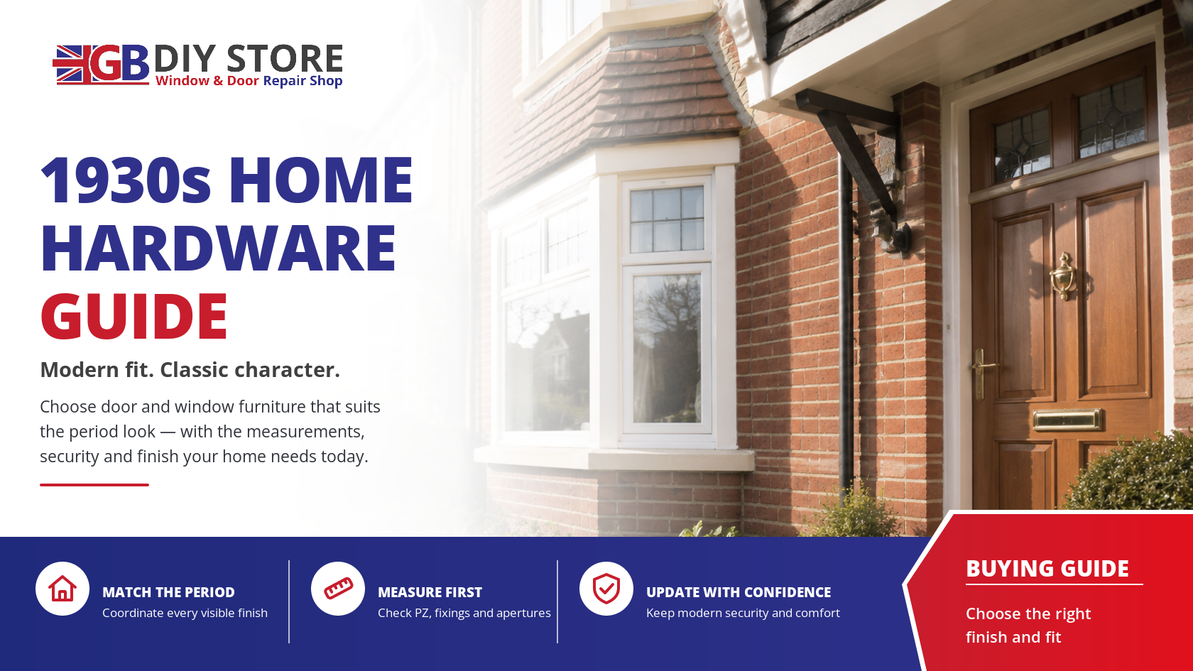
uPVC Hardware for a 1930s Semi: Keeping the Period Look
Choosing door and window hardware for the classic British semi-detached (1930s) home is a balancing act between tradition and modernity. The bay-fronted semi went up in its hundreds of thousands between the wars, and nearly a century on, most of them have swapped their original timber casements and panelled front doors for uPVC and composite replacements. That's good news for draughts, security, and heating bills, but it leaves a question the original builders never faced: which modern hardware actually suits the house?
The good news? You don't need 1930’s originals to keep the period look. This guide covers the doors, the windows, and the finishing touches, plus the measurements to take before you order anything.
What Made 1930s Hardware Distinctive
20th-century builders had a strong sense of style. Front doors carried Bakelite or brass knobs, stepped Art Deco letterplates, and hefty knockers, often set against stained glass and oak-grained panelling. Tudor-revival semis leaned on black ironmongery for the cottage look, whilst smarter suburban avenues went for polished chrome.
Windows were mainly timber casements, usually in a two-storey bay, fitted with cockspur handles and stays. Very few of those originals survive, but the shapes and finishes they used are still the visual reference for what looks right on the house today.
Front Door Furniture: Get the Set Right
Start with the front door, because it carries the most character and wows guests with kerb appeal. A composite door with a 1930s-style panel layout looks convincing from the kerb; what usually gives the game away is mismatched furniture. To avoid this, treat the knocker, letterplate, and handle as a set in one finish rather than three separate purchases. Our door furniture range covers matching pieces, and our door knockers include traditional patterns that sit happily on a traditional or modern door.
For the letterplate, measure the aperture (the letter hole in the door) and the door thickness before ordering a replacement letterbox, as sizes vary more than you might expect. Antique brass, black, and chrome all work as period-correct on a 1930s door. We would suggest avoiding bright gold-effect furniture as this tends to look more 1980s than 1930s.
Door Handles for uPVC and Composite Doors
If your door is uPVC or composite, the handle is a standard replacement part, whatever the style of the house. Two measurements matter: the PZ, measured from the centre of the spindle hole to the centre of the keyhole (92mm on most uPVC and composite doors), and the fixing centres, the distance between the two screw holes. Our guide to measuring a uPVC door handle walks through both with photos, or the door handle finder will show only the handles that fit.
For the period look, the finish does the work rather than the mechanism: antique brass or black levers suit most 1930s semis far better than bright white. If you're weighing up types, finishes, and sprung versus unsprung, read our guide on how to choose a uPVC door handle before you order.
Window Handles: uPVC Casements and the Timber Survivors
Most 1930s bays now have uPVC casements on an espag mechanism, where turning the handle drives a locking bar down the frame. Espag window handles come in finishes from white through to antique brass. Key-locking versions are worth the small extra cost.
If your semi still has its original timber casements, you're in the minority, and it's worth keeping them. They take cockspur window handles, the curved handles that latch over a striker plate, available in 7mm, 13mm, and 21mm heights to suit the frame. Our full window handle range covers both types.
The design thinking here is the same as for older houses. Our guide to choosing window handles for a Victorian home covers the finish and security trade-offs in more detail, and nearly all of it applies a few decades later.
The Details That Finish the Job
Two smaller jobs round out a hardware refresh. If there are children in the house, fit window restrictors on the upstairs windows, especially any bay windows, as these have large openings and are low compared with modern windows. Our UK guide to window and door restrictors covers when they're required and which type to choose.
And once you've settled on a finish, carry it through everything visible together: door furniture, window handles, and letterplate. Our companion guide to choosing door and window furniture by finish goes deeper on chrome, gold, black, and white options.
Shop 1930s-Friendly Hardware with GB DIY
Kitting out a 1930s semi doesn't need specialist suppliers, just the right sizes and an honest finish. We stock replacement uPVC door handles, window handles, letterboxes, and door furniture, with same-day dispatch on orders placed before 3 pm. If you're not sure what you're looking at, send us a photo or give us a ring on 01623 622205 and we'll point you in the right direction.
FAQ section
Can I fit period-style handles to a uPVC door?
Yes. Modern uPVC door handles are standard parts that come in period-friendly finishes such as antique brass and black. Match the PZ (usually 92mm) and the fixing centres of your existing handle, and the swap takes about ten minutes with a screwdriver.
What finish suits a 1930s semi best?
Antique brass and black both sit comfortably on interwar houses, and polished chrome is genuinely period, since it was the fashionable Art Deco finish of the decade. The main thing is consistency: pick one finish family and use it across the door furniture, handles, and letterplate.
My 1930s semi still has timber casement windows. What handles do they take?
Original timber casements take cockspur handles, which latch over a striker plate on the frame. They come in 7mm, 13mm, and 21mm heights, so measure the step between the casement and the frame before ordering. If the window has been replaced with uPVC, it will take an espag handle instead.
Do door and window handles need to match?
They don't have to, but the house looks better when they do. Keep everything that's visible together in the same finish family, and avoid mixing polished and antique versions of the same metal, as that clash is more noticeable than two different metals.
Recent Posts
-

Window Sealant or Window Seal? What's Gone Wrong | GB DIY
If you have been looking for how to replace window sealant, there is a fair chance the part you need …6th Oct 2026 -

Types of uPVC Door Hinges: How to Identify Yours
Working out the type of uPVC door hinges you have is the job standing between you and a repair that …10th Sep 2026 -
How to Measure Window Hinges and Friction Stays
Knowing how to measure window hinges properly is the difference between a stay that drops straight i …10th Sep 2026