
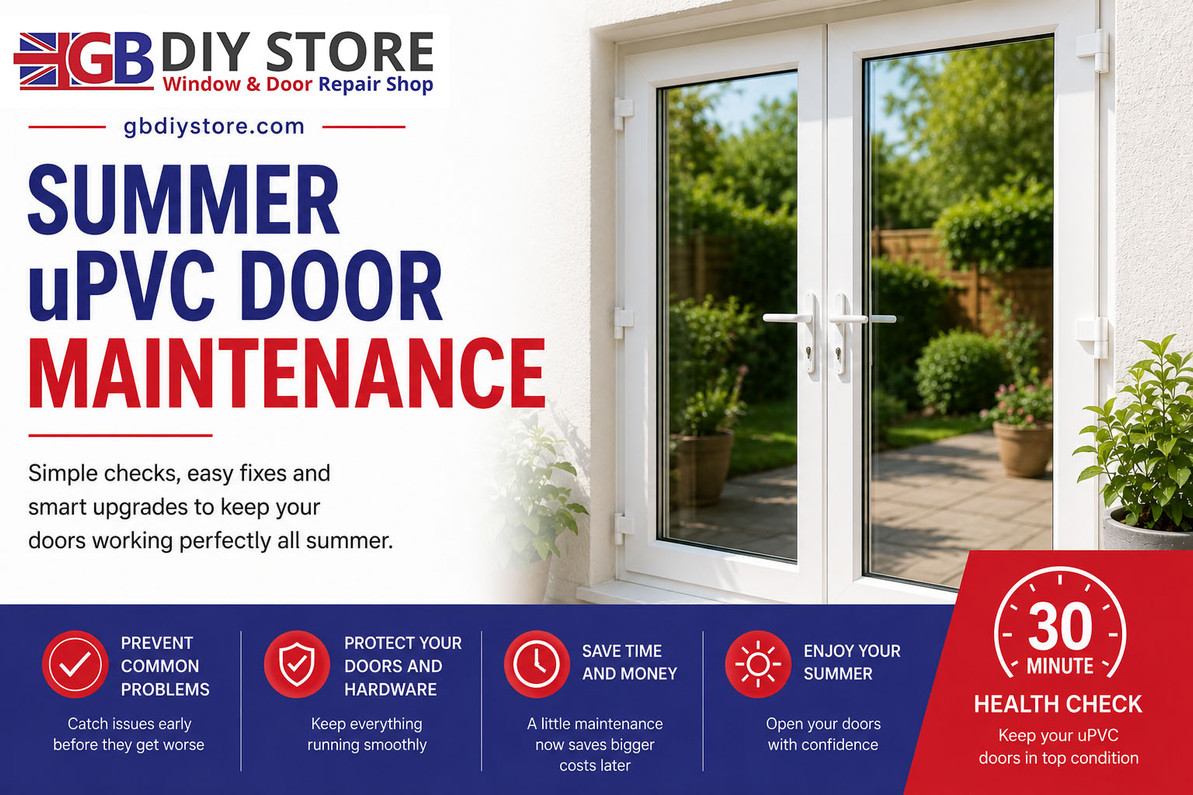
Summer Door Guide: Getting Your uPVC Doors Ready for the Garden Season
uPVC door summer maintenance is one of those jobs that quietly creeps up on homeowners the minute the weather turns sunny. The garden comes back into use, the French doors and patio doors get opened properly for the first time in months, and suddenly the handle won't lift cleanly, the door swings into the wall in a breeze, or the glazing's gone misty, and you can't see the lawn through it.
Most of these problems aren't new. They've been brewing all winter while the doors sat unused, and the warmer weather just brings them out into the open.
The good news? Almost all of them are fixable with a couple of basic tools, the right parts, and an afternoon. This guide walks through the most common summer uPVC door problems, what to check, and how to put them right before they turn into bigger jobs. If you've already worked through our Spring Window Health Check, this is the door-focused follow-up.
Why Summer is When uPVC Door Problems Show Up
Through winter, back doors, garden entrances, and French doors barely get touched. The locks sit unused, dust and grit work their way into the mechanism, and any water in the drainage slots just sits there. uPVC, a popular choice for homes, also moves with temperature, so frames that settled into one position over a cold winter can shift as things warm up.
Then summer arrives, you start opening everything daily, and the issues show themselves all at once:
- Locks that haven't been used in months feel stiff or jam
- Doors that fit the frame fine in February now scrape or won't lift properly to lock
- French doors slam back into the wall the first time you open them in a breeze
- Sealed glazing units with a slow leak suddenly fog up under direct sunlight
Working through these checks now saves a much bigger headache in July when you actually want to use the garden.
French Door Restrictors: The Most Underrated Summer Upgrade
If you've got French doors that open onto a garden, patio or conservatory, this is probably the single most useful upgrade you'll make this year. French doors are designed to open wide. The first time you open them properly in summer, the door swings further than expected, the handle catches the wall, and either the handle takes a chip out of the plaster, or the wall takes a chip out of the handle. Worse, a breeze comes through the open doorway, the door blows shut on itself, and you're either fixing a damaged hinge or replacing parts entirely.
A hold-open door restrictor sorts both problems in one go. It limits the door's opening to 90 degrees, so it can't swing back into the wall, and a friction stay holds it open at that angle so winds don't blow it shut. Our uPVC Door Restrictor Arm with Stay and Hold Open is the one most customers fit. It sits in the eurogroove on top of the door, the striker plate screws to the outer frame, and it's only visible when the door is open.
What to look for:
- French doors that hit the wall, sill caps or garden furniture when fully open
- Doors that blow shut in a breeze and risk damaging the handle or hinges
- Conservatory doors you'd like to leave open without propping with a brick
- Light winds that catch the door and slam it against the frame
A quick note on French and double doors: you'll need one restrictor for each leaf, so plan to order two. If you've got an unusual frame, give us a ring on 01623 622205, and we'll talk you through whether it'll work. For other door types and window opening restriction, have a browse through our full door restrictors and window restrictors ranges.
Lock Mechanisms, Gearboxes and the Stiff French Door Problem
The second classic summer issue is the French door or patio door that's gone stiff over winter. The mechanism feels gritty, the handle won't lift smoothly, or the door locks at some points but not others. It's the same root cause as the restrictor problem: doors that haven't been used.
When a multipoint lock sits unused for months, three things happen. Dust and debris work their way into the gearbox. The cylinder picks up dirt at the keyway. And the door itself drops a touch on its hinges, so the locking points no longer line up cleanly with the keeps in the frame.
What to look for:
- The handle needs more force than usual to lift fully
- The key turns, but the door isn't actually pulling the points home
- The lock engages at the top but not the bottom (or vice versa)
- A clicking or grinding feel when you lift the handle
The fix is usually one of three things. First, clean and lubricate. A puff of dry silicone spray into the gearbox and along the locking points clears most stiffness. Use silicone, not WD-40 or oil, both of which attract more dirt. For the cylinder itself, graphite powder is the right choice.
Second, identify whether the gearbox is on its way out. If lubrication hasn't fixed it, or you've been forcing the handle for months, the gearbox may have worn. Our Multipoint Door Lock Gearbox Identification tool can walk you through identifying yours so you can order the right replacement from our multipoint lock gearboxes range.
Third, while you've got the door apart, check whether your euro cylinder is up to current security standards. If it's more than a few years old, look at a 3-star TS007 anti-snap cylinder. Our euro cylinders range covers everything from straightforward replacements to high-security options.
Door Alignment and Hinge Adjustment
When the handle feels heavy, but the mechanism itself is clean, the issue is almost always alignment. The door's dropped a millimetre or two on its hinges, the hooks aren't quite meeting the keeps, and the mechanism is fighting the door back into position every time you lock it.
This is the bit homeowners often pay a tradesperson for and probably shouldn't. uPVC door hinges are designed to be adjusted. Most have three adjustment screws: one for height, one for compression (how tight the door pulls against the frame), and one for lateral position. Five minutes with an Allen key gets you most of the way there.
What to look for:
- The door scrapes the threshold or the frame at the top
- The handle lifts more easily on one side of the door than the other
- A visible gap on one side of the frame when the door is closed
- The compression seal isn't being squashed evenly along the length of the door
A word of warning: adjust in small turns, a quarter at a time, and test after each one. Over-tighten the compression, and you'll wear the seal prematurely. Drop the height too far, and the door scrapes the threshold. Take it steady.
If you need to replace the hinges entirely, our uPVC door hinges and composite door hinges ranges cover the common patterns. The uPVC Door Handle Finder is also useful if the alignment problem turns out to be a sagging handle rather than the door itself.
Misted Glazing Units: How to Spot It
This one gets noticeably worse in summer, which is why it crops up here. If your double glazing's gone foggy between the panes, the sealed unit has failed. The seal around the spacer bar has perished, moist air has worked its way inside, and the strip meant to absorb moisture has long since saturated.
You notice it most when the sun's behind it. The unit looks fine on a grey day; then the sun comes out, and you can't see the garden through your patio doors. Think driving into low sun through a dirty windscreen, same effect.
Unfortunately, that will require glazing and a professional. What we can help with is the bits that come off and need to go back on; our wedge gasket seals and glazing tape ranges cover those. The other thing worth doing while the unit's out, which we'll come to next, is sorting the drainage that caused the seal to fail in the first place.
Drainage Slots and the Water That Sat There All Winter
This is the hidden cause of most failed glazing units and a fair amount of frame damage too. Every uPVC frame has small drainage slots along the bottom of the outer frame, designed to let any water that gets past the seals escape harmlessly. They're easy to miss, often tucked under the bottom of the frame and covered by a small plastic clip.
The trouble is they can get blocked. Leaves, grit, pollen and dust work their way down into those slots over winter, and by spring you've got water sitting in the bottom of the frame with nowhere to go. That standing water is what eventually breaks down the seal on a glazing unit. It also speeds up corrosion on any steel reinforcement inside the frame.
Clearing them is a two-minute job. Find the slots (usually two or three along the bottom of each frame, on the outside face), prise off the cover clips if there are any, and clear the slot with a thin piece of wire or a cocktail stick. Run a bit of water in from inside to check it's flowing through. Pop the clips back on.
While you've got the frame apart, this is the moment to check the condition of the seals. Our Seal Centre is the one-stop resource for identifying which gasket profile you've got and ordering the right replacement.
Seals, Gaskets and Energy Loss
Most homeowners only think about seals in winter when they're trying to keep cold air out. The summer case is the reverse. If you run air conditioning, fans, or just want to keep the heat outside, the same seals that kept heat in over winter are now keeping cool air in. They're also what stops pollen and insects drifting in around the edges of the frame.
The two main seal types in a uPVC door are bubble gasket seals (around the door edge where it meets the frame) and wedge gasket seals (around the glass itself). Both perish with age and UV exposure.
What to look for:
- Visible gaps between the door and frame when the door is closed
- Cracked, hardened or flattened rubber that's lost its springiness
- A noticeable temperature difference between the room with the door and other rooms
This is the same job we covered in the Winter Window Guide, applied to doors. Have a browse through our bubble gasket seals, bifold door gasket seals and wedge gasket seals ranges, or order a sample pack from the Seal Centre if you're not sure.
A Summer uPVC Door Health Check: What to Do in 30 Minutes
If you do nothing else this season, work through this list. Most homes can have all external doors checked in half an hour.
- Test every external door - Open it, close it, lift the handle, turn the key. Note any stiffness, scraping or handles that don't lift cleanly.
- Clear the drainage slots - Find them, clear them, run a bit of water through.
- Lubricate the locking points - A puff of silicone spray on each hook or shootbolt, and graphite powder in the cylinder.
- Check the hinges - If a door scrapes or the handle lifts unevenly, adjust the hinges a quarter-turn at a time.
- Inspect the seals - Look for hardened, cracked or flattened rubber on the door edge and around any glass.
- Fit a restrictor on French and patio doors - The one job people skip and regret the first windy afternoon.
If you spot something that needs a part, order it before the weekend. We dispatch same-day on orders placed before 3 pm.
Work with GB DIY Today
Sorting out uPVC doors before summer properly arrives pays you back every time you open the back door without thinking about it. Most parts are cheap, most fixes take under an hour, and almost all are within reach of a confident DIYer.
At GB DIY Store, we stock everything you'll need: French and patio door restrictors, multipoint door lock gearboxes, 3-star TS007 euro cylinders, uPVC and composite door hinges, bubble and wedge gasket seals, glazing tape, and silicone lubricants in our tools and supplies range.
For landlords and property maintenance teams sorting out multiple properties, our trade accounts page covers volume pricing.
Have questions about a stiff lock, a sagging door or which restrictor fits your French doors?
Give us a ring on 01623 622205, drop us a message or send us a photo and our team will help you work out exactly what you need. We're here to help.
Frequently Asked Questions
Why does my French door not lock properly in summer?
In most cases, it's a combination of two things. The lock mechanism has stiffened up over winter from disuse, and the door itself has dropped a millimetre or two on its hinges so the locking points don't line up cleanly with the keeps. Start with a clean and a lubricant: silicone spray on the locking points and graphite powder in the cylinder. If that doesn't sort it, the hinges need a quarter-turn adjustment. Our multipoint lock gearbox range covers replacements if the gearbox has actually worn out.
Do I need a restrictor on both French doors?
Yes, one for each leaf. French doors and other double doors are designed to open independently, so a single restrictor only protects the door it's fitted to. The good news is the hold-open restrictor arm is a quick fit, so doing both is a single afternoon's job.
Can I fix misted double glazing myself?
Not really, no. A misted unit means the seal around the sealed glazing unit has failed and moisture has worked its way between the panes. The unit itself needs replacing by a glazier, who'll lift the glass out and fit a new sealed unit. What you can do yourself, and what most homeowners forget, is sort out the drainage in the frame and check the gasket seals around the glass once the new unit's in. Our Seal Centre covers the gasket side of the job.
How often should I lubricate a uPVC door lock?
Twice a year is the rule of thumb. A quick spray of silicone on the locking points and graphite in the cylinder, once at the start of summer when you've started using the door properly again, and once before winter when you're shutting things up. Don't use WD-40 or oil-based lubricants on locks, they attract dirt and make problems worse over time.
Recent Posts
-

Window Sealant or Window Seal? What's Gone Wrong | GB DIY
If you have been looking for how to replace window sealant, there is a fair chance the part you need …6th Oct 2026 -

Types of uPVC Door Hinges: How to Identify Yours
Working out the type of uPVC door hinges you have is the job standing between you and a repair that …10th Sep 2026 -
How to Measure Window Hinges and Friction Stays
Knowing how to measure window hinges properly is the difference between a stay that drops straight i …10th Sep 2026